

If you’re wondering how to not be obsessed with someone in a relationship, you’ve already taken the hardest step: admitting that the balance is off. It’s okay! It doesn’t mean you’re “crazy” or that the relationship is doomed. It just means your internal compass has shifted too far toward them, and it’s time to find your way back to yourself.
That “honeymoon phase” where every text notification feels like a shot of pure dopamine. But sometimes, that sweet affection morphs into something heavier. You start checking their “last seen” status every five minutes. You cancel other engagements with friends with the hope that they might want to hang out. Suddenly, your entire mood depends on whether they used an emoji in their last message.
Understanding How the Obsession Cycle Works
Before we dig deep into the “how-to”, let’s clarify what we mean. Obsession in a relationship isn’t usually about being too in love. It’s often a cocktail of anxiety, low self-esteem, and a dash of biological brain chemistry. When we become obsessed, our brains treat the person like a drug. We crave the next “hit” of validation.
The goal isn’t to love them less; it’s to love yourself and your own life more. You want to move from a place of “I need you to survive” to “I choose you because you enhance my already awesome life.”
How to Not Be Obsessed With Someone
1. Reclaim Your Individual Identity
When you’re obsessed, your identity begins to merge with your partner’s. You start liking the music they like, adopting their slang, and forgetting what you actually enjoy doing on a Tuesday night.
Rediscover Your Hobbies
Cast your mind back to those activities you used to engage in. What were your best moments?
- Did you paint?
- Were you a gym rat?
- Did you spend hours reading sci-fi novels?
Choose one that does not relate to your partner and go do it. If you’re struggling with how to not be obsessed with someone in a relationship, the best antidote is a busy, fulfilling personal life. When you’re focused on mastering a new skill or finishing a project, you physically don’t have the time to obsess over their text response time.
2. Set Digital Boundaries (The “Phone” Diet)
Technology is the biggest fuel for obsession. We have 24/7 access to our partners, which sounds great until you’re analyzing the tone of a “K” message for three hours.
Stop the “Last Seen” Surveillance
If you find yourself constantly checking their location or social media activity, you have to go cold turkey on those specific behaviors. If it helps, mute their stories and only check your phone once an hour—not every few minutes.. By breaking the habit of digital monitoring, you lower your brain’s cortisol levels and start breaking the cycle of obsession.
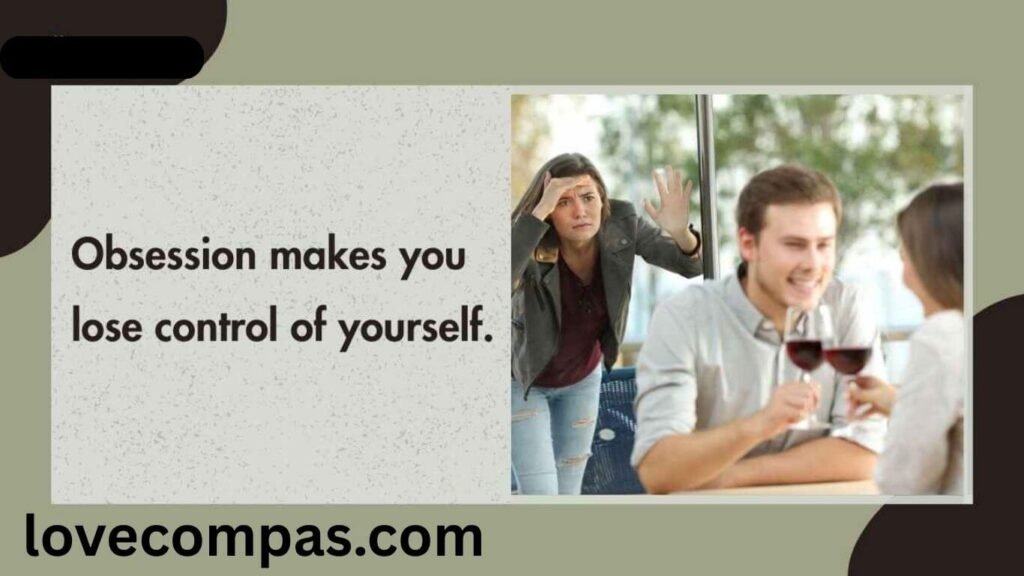
3. Diversify Your Support System
A major reason we get obsessed is that we make our partner our “everything”—our best friend, therapist, entertainment, and lover. That’s a heavy burden to place on one person.
Make a conscious effort to pour energy back into your other relationships. Call your mom. Grab a coffee with that friend you’ve been meaning to see.” When you have a rich social life, your partner becomes a piece of the pie rather than the whole meal. If you want to know how to not be obsessed with someone in a relationship, check your activities log. If it’s 100% filled with your partner, it’s time to invite some other people back in.
4. Practice “Self-Soothed” Anxiety
Obsession is often just anxiety in a trench coat. When they go quiet, your nervous system reads it as a threat, and you obsess just to feel secure again.
Instead of reaching out again or spiraling, try to sit with the discomfort. Remind yourself: “I am safe. My worth is not defined by this person’s immediate attention.”Learning how to calm your own nervous system is a superpower. It keeps you from reacting in “clingy” ways that can unintentionally push people away.
5. Address the Root Cause: Why Now?
Sometimes we obsess because we’re using the relationship to avoid something else. Is work draining you lately? Does your living situation feel off?? Are you unhappy with your living situation? It’s much easier to focus on “Why didn’t they call?” than it is to face “What am I doing with my career?”
Ask yourself honestly: Is this obsession a distraction? If you focus on your own growth and fix the areas of your life that feel lacking, the urge to obsess over someone else naturally fades. You step back into the center of your own life..
6. The Power of “Space”
Space isn’t a threat; it’s the oxygen that keeps the fire of a relationship burning. Without space, there is no room for longing or growth.
Try scheduling “me time” where you intentionally don’t communicate. It’s not about strategy or trying to seem unavailable. It’s about proving to yourself that your life still stands without them. When you realize you can have a great day entirely on your own, the obsession loses its grip.
Finding the Balance

Learning how to not be obsessed with someone in a relationship is a journey of returning to your own center. It’s about realizing that you were a fascinating, capable person before they arrived, and you still are. A good relationship gives you shelter, not stress.
Prioritize your peace, invest in your passions, and keep your circle wide. When you value yourself, you stop looking for someone else to be your entire world.
Also Read…..
- how to stop overthinking about someone you love
- how to stop overthinking in a relationship
- How can I stop overthinking my relationship
- Relationship Guidance: A Fresh Look At Partnership
FAQs
Absolutely. The “limerence” phase involves a lot of dopamine and oxytocin, which can feel like obsession. It only becomes a problem when it starts affecting your mental health, your work, or your other relationships.
Not necessarily, but it often points to an “anxious attachment style.” It usually means you’re looking for external validation to feel secure, which is something you can work on through self-care or therapy.
Actually, the opposite is usually true! Keeping your own life and boundaries doesn’t push people away—it makes you more captivating.. It creates a healthy dynamic where both people have room to breathe.
Take things at face value. If they say they’re “busy,” assume they are busy—not that they’re falling out of love. If a text is ambiguous, put the phone down and wait until you can talk in person.
Yes! Once you re-establish your boundaries and find your own “center,” the relationship can shift into a much healthier, more stable phase. It’s all about recalibrating the balance.